
North and South Carolina
Structured Cabling for Commercial Facilities
Plan building a labeled and testable copper and fiber foundation for networks, security and audiovisual systems for commercial properties across North and South Carolina.
Where this solution fits
Successful projects begin by documenting the site, the people who operate it and the result the organization needs. Product and service choices can then be compared against compatibility, lifecycle, cybersecurity, code, installation and support requirements.
360 Mobile Vision begins with the organization’s workflow, existing environment and acceptance criteria. The result is a scoped recommendation rather than a generic equipment or feature list.
Capabilities and decisions
Low-voltage services
Open the related guide for product, design and implementation details.
Fiber optics
Open the related guide for product, design and implementation details.
Network services
Open the related guide for product, design and implementation details.
Commercial data cabling
Open the related guide for product, design and implementation details.
Planning checklist
The discovery conversation should settle the following items before implementation begins:
- Existing equipment, drawings, credentials and available configuration backups.
- Required users, locations, workflows, integrations and expected growth.
- Power, pathways, cabling, network and environmental constraints.
- Safety, egress, privacy, retention and organizational policy requirements.
- Product support status, update path and compatible replacement options.
- Commissioning tests, administrator training and final documentation.
How a project moves forward
Discover
Review objectives, conditions and the existing technology baseline.
Compare
Evaluate compatible approaches and lifecycle tradeoffs.
Scope
Define equipment, labor, integrations and project responsibilities.
Implement
Install and configure through controlled, documented changes.
Accept
Test agreed workflows and complete owner handoff.
Discuss a Carolina project
Share the current environment, required outcomes, users, timeline and known constraints. We can help define a practical next step for a North Carolina or South Carolina facility.
Greenville and Upstate South Carolina cabling
A structured cabling installation should end with proof—not mystery cables
360 Mobile Vision surveys, installs, tests, repairs and documents structured cabling for commercial facilities in Greenville, Piedmont and the surrounding Upstate, with project coverage across North and South Carolina. Copper and fiber work can support networks, wireless access points, cameras, access control, intercoms, audiovisual endpoints and other building systems.
The field scope behind a dependable result
Site discovery
Review drawings, telecom rooms, rack capacity, ceiling and pathway conditions, outlet locations, cable distances, device power and working-hour restrictions. Existing cabling is traced or sampled when reuse is being considered.
Pathway and installation
Define supports, sleeves, conduit use, penetrations, firestopping, cable separation, service loops and protection in exposed or industrial areas. Occupied work is sequenced around the client’s operating schedule.
Labeling and patching
Use an identifier that remains consistent at the faceplate, cable, patch panel and test report. Rack layout and patching should leave the system serviceable instead of hiding ports behind unmanaged cords.
Testing and handoff
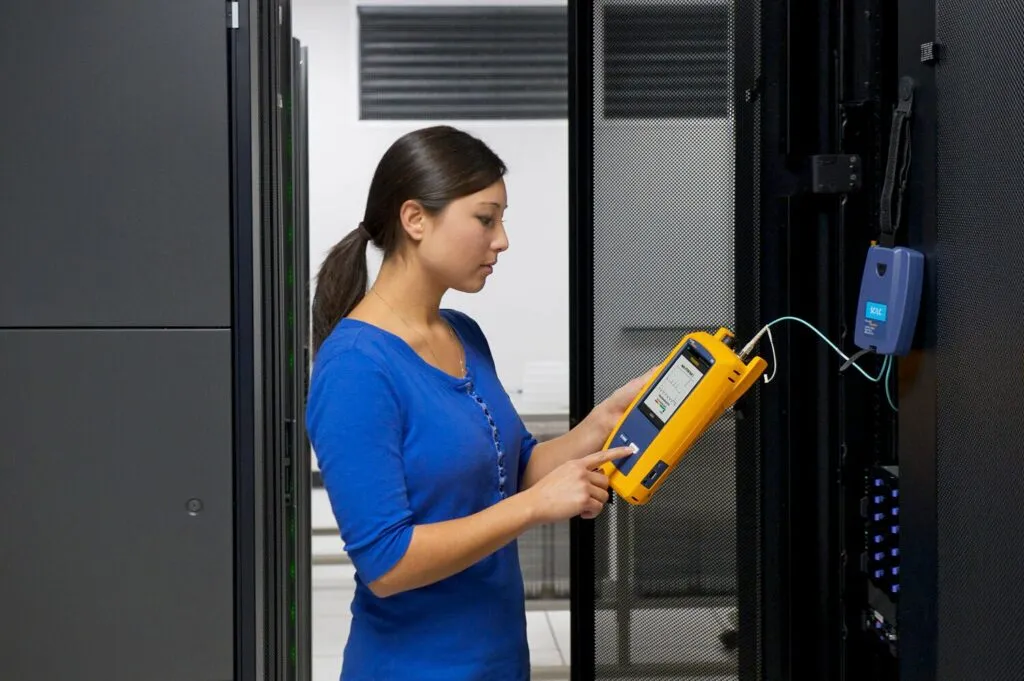
Agree on copper certification or fiber test requirements before installation. Resolve exceptions, then deliver the approved records, port schedule, photographs and outstanding-condition list.
Questions that prevent change orders
- Is the price based on an actual survey, usable drawings or an allowance that still needs verification?
- Are patch panels, jacks, faceplates, patch cords, racks, cable management and labeling included?
- Does the planned cabling support the required PoE devices and active-network architecture?
- Who coordinates lifts, ceiling access, permits, firestopping, after-hours work and restoration?
- Which test standard, test limit and deliverable format define acceptance?
For backbone and long-distance links, review our fiber-optic services. For switching, wireless or network remediation, see network services. Request a Greenville-area or Carolina cabling survey with floor plans and device counts if available.
Structured cabling cost, testing and contractor scope
Carolina clients can use this parent-company guide to prepare requirements before a local survey, installation, maintenance visit or repair.
Discuss installation, maintenance or service
Detailed guide maintained by 360TechnologyGroup.com, the parent-company knowledge center.
Authorized · Certified · Carolinas
Authorized dealer, certified installer and integrator — the Carolinas
360 Mobile Vision designs, installs and supports structured cabling, certified and documented for businesses throughout North and South Carolina. We are an authorized dealer for the manufacturers we fit, which is what separates a supported system from a box bought online with nobody to call.
- DealerGenuine equipment, correct licensing and a real manufacturer support path.
- InstallerOur own certified technicians survey, cable, mount, program and commission the system.
- IntegratorNew work joined to whatever is already installed — cameras, doors, network, identity.
- Still here afterwardsRepairs, maintenance, expansion and takeover of systems installed by others. Emergency support around the clock.
Structured Cabling: planning details and decision points
Planning Structured Cabling begins with a field-verified scope. The proposal should account for existing infrastructure, required outcomes, coordination with other trades, commissioning and the information the client will need after installation.
- Scope boundaries: Separate included work, owner-furnished items, third-party responsibilities and optional improvements.
- Site readiness: Verify access, pathways, power, network service, mounting conditions and environmental limitations.
- Coordination: Identify dependencies involving construction, IT, facilities, property management and system vendors.
- Commissioning: Define functional tests, issue resolution, training and the evidence required for acceptance.
- Support: Record documentation, warranty routes, official downloads, service contacts and maintenance responsibilities.
Information that improves the proposal
Before pricing, gather available drawings, site counts, existing model numbers, known trouble areas, preferred management methods, required integrations and the people who will approve the final result. This lets the project specialist distinguish required work from options and avoids basing the design on assumptions.
Related choices on this site include Belden, Panduit. Review those guides together when the systems share cabling, identity, network or operating requirements.
From assessment to a usable handoff
A dependable Structured Cabling scope should move through four documented stages:
- Discover: verify field conditions, users, existing assets, constraints, priorities and the desired operating result.
- Design: compare practical options, identify tradeoffs, confirm compatibility and establish a written basis of design.
- Deliver: coordinate scheduling and responsibilities, install or configure the approved scope, and record changes found in the field.
- Validate: test the agreed functions, resolve exceptions, train the responsible users and provide the final documentation.
This sequence gives the client clear review points before purchasing decisions become difficult to change. It also creates a better basis for comparing proposals: equipment, labor, subscriptions, exclusions, testing and support can be evaluated as parts of one operating plan instead of as unrelated line items.