
North and South Carolina
Panduit Network and Infrastructure Solutions
Evaluate Panduit product families, management choices and deployment requirements for Carolina facilities.
Where this solution fits
A Panduit project should be selected around topology, scale, management, licensing, interoperability and lifecycle—not around a logo alone. We compare the proposed platform with the existing network and document the responsibilities for configuration, updates and support.
360 Mobile Vision begins with the organization’s workflow, existing environment and acceptance criteria. The result is a scoped recommendation rather than a generic equipment or feature list.
Capabilities and decisions
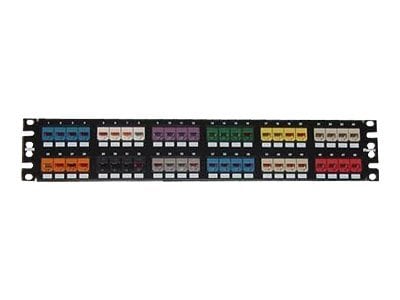
copper and fiber connectivity
Review models, capacity, management and compatibility for copper and fiber connectivity.
racks, cabinets and cable management
Review models, capacity, management and compatibility for racks, cabinets and cable management.
pathways and identification
Review models, capacity, management and compatibility for pathways and identification.
grounding and data-center infrastructure
Review models, capacity, management and compatibility for grounding and data-center infrastructure.
Planning checklist
The discovery conversation should settle the following items before implementation begins:
- Current topology, addressing, VLANs, identity and security policy.
- Port counts, PoE budgets, uplinks, wireless coverage or power requirements.
- Cloud, controller, subscription and administrator-account dependencies.
- Interoperability with existing switches, optics, cabling and applications.
- Firmware policy, maintenance windows, backups and rollback procedure.
- Monitoring, alert routing, documentation and lifecycle ownership.
How a project moves forward
Assess
Inventory the current environment and confirm the operational goal.
Select
Compare product families, capacity and management dependencies.
Stage
Prepare software, configuration, naming and acceptance checks.
Install
Deploy, label and integrate components with controlled changes.
Handoff
Provide records, training and official support paths.
Discuss a Carolina project
Share the current environment, required outcomes, users, timeline and known constraints. We can help define a practical next step for a North Carolina or South Carolina facility.
Official Panduit software, firmware and support
Use the manufacturer links below for current software, firmware, release notes, manuals and technical resources. 360 Mobile Vision links directly to official manufacturer portals and does not copy or host firmware files.
Before installing an update: verify the exact model, region, hardware revision, current version, required intermediate releases, licensing or support entitlement, backup and rollback plan, integrations and maintenance window. An incorrect firmware package or upgrade sequence can interrupt service, invalidate compatibility or prevent a downgrade. Coordinate updates for monitored, life-safety-adjacent or business-critical systems with the system administrator and an authorized specialist.
Some resources require a customer, dealer, certified-technician or active-support login. Cloud-managed products may update automatically and may not provide a public firmware file.
Panduit: planning details and decision points
Selecting Panduit is not only a model-number exercise. A sound design checks how the available switching, wireless, routing, security and management families fit the site, the support lifecycle and the client’s existing standards.
- Architecture: Match device roles, uplinks, power budgets, radio coverage and security boundaries to the actual topology.
- Management: Compare local and cloud management, alerting, configuration backup, administrator roles and multi-site visibility.
- Licensing: Document subscriptions, support terms, feature tiers and renewal responsibilities before purchase.
- Compatibility: Validate optics, cabling, power, authentication, voice, cameras and other connected systems.
- Lifecycle: Use current product families and record replacement, firmware and vendor-support paths for the operations team.
Information that improves the proposal
Before pricing, gather available drawings, site counts, existing model numbers, known trouble areas, preferred management methods, required integrations and the people who will approve the final result. This lets the project specialist distinguish required work from options and avoids basing the design on assumptions.
Related choices on this site include BIOMETRIC ACCESS CONTROL, Network Services, Security Camera Installation, Structured Cabling. Review those guides together when the systems share cabling, identity, network or operating requirements.
From assessment to a usable handoff
A dependable Panduit scope should move through four documented stages:
- Discover: verify field conditions, users, existing assets, constraints, priorities and the desired operating result.
- Design: compare practical options, identify tradeoffs, confirm compatibility and establish a written basis of design.
- Deliver: coordinate scheduling and responsibilities, install or configure the approved scope, and record changes found in the field.
- Validate: test the agreed functions, resolve exceptions, train the responsible users and provide the final documentation.
This sequence gives the client clear review points before purchasing decisions become difficult to change. It also creates a better basis for comparing proposals: equipment, labor, subscriptions, exclusions, testing and support can be evaluated as parts of one operating plan instead of as unrelated line items.
Related services, products and planning guides
Access Control Installation
Use the Access Control Installation guide to compare compatible equipment, integrations, deployment choices and lifecycle responsibilities related to this project.
Network Services
Use the Network Services guide to compare compatible equipment, integrations, deployment choices and lifecycle responsibilities related to this project.
Security Camera Installation
Use the Security Camera Installation guide to compare compatible equipment, integrations, deployment choices and lifecycle responsibilities related to this project.
Structured Cabling
Use the Structured Cabling guide to compare compatible equipment, integrations, deployment choices and lifecycle responsibilities related to this project.